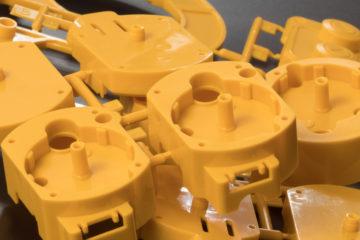
How is a Toothbrush Made? An Overview of the Design Process
Whenever you brush your teeth, do you ever stop and wonder how your toothbrush was made? Thanks to plastic injection moulding, thousands of toothbrushes are made every day. A toothbrush may seem like a simple plastic object, but it’s an essential tool for oral health. Without toothbrushes, we would be susceptible to cavities, gum disease and mouth cancer.
History of Toothbrushes
Toothbrushes have come a long way over the centuries. Since 3500 BC, people around the world have been using tools to clean their teeth. Egyptians and Babylonians made brushes by fraying the end of twigs. In the 15th century, the Chinese invented the first toothbrush by attaching bristles from pigs’ necks onto a bamboo handle. The design was adapted by Europeans, who modified the design using soft horsehairs.
The 8 Most Important Types of Plastic
Plastic injection moulding is a booming industry. Almost every product in the 21st century requires plastic in one form or another. The invention of plastic was one of the greatest achievements in industrial production due to the fact that it’s synthetic and not limited in nature.
Here are the eight most important types of plastic and their uses:
- Saran
Also known as Polyvinylidine Chloride, Saran was discovered by accident in 1933. The United States Air Force sprayed it on fighter planes to keep them protected against salty sea spray. In those days, it had an ugly colour and foul odour. Now, it’s mostly known for the creation of Saran wrap.
- Polyvinyl chloride (PVC)
PVC is the third most widely used plastic. It’s primarily used in construction because it’s easy to work with, cheap, and durable. A softer form is made for use in upholstery, clothing, and inflatable products. PVC can even be used to replace rubber.
How Is a Trophy Made?
One of the most popular uses of plastic injection moulding is the creation of trophies. Trophies are used in just about every industry; everyone from celebrities to students receive trophies as awards. They are physical evidence that a person or group of people has done something spectacular.
They range from inexpensive to very, very expensive. But how are they made?
Here is an overview of the creation and moulding process:
- Each part of a trophy is designed separately. Each part goes through a design process. An assembler selects components to put the trophy together. The pieces include: a base, column(s), the riser, and the figurine. Some trophies have an additional tier on top of the columns. A trophy can have a single column or three or four.
- The product development team works on the concept. The manufacturers conduct research, talk to customers, and brainstorm ideas. Customer opinion and current trends play a role in the production of a trophy. The product development team consists of designers, graphic artists, sculptors, and engineers.
How is a Frisbee Made?
If you are interested in product design and have a creative streak in you, then you have no doubt stared at many different products wondering how they are created. In this article we are going to discuss the traditional and ever popular Frisbee.
The first Frisbee was created nearly 40 years ago and today it is one of the most popular toys for men, women and children of all ages. Mattel, one of the world’s leading toy companies, has reported that more than 90% of the U.S. population has used a Frisbee at one time or another.
The actual origin of the Frisbee is quite interesting. It originates from a bakery called the Frisbee Pie Company in New Haven, Connecticut. This bakery was established shortly after the civil war. During their time of operation, the drivers, employees and even local students took to tossing the pie plates around. This is how the term Frisbee has come to define the action of tossing a disc through the air.
7 Tips for a More Effective Product Design Process
If you are interested in product design and the overall design process, you are probably already aware that there is far more to the process than simply creating an object. This process involves a great deal of creativity as well as the ability to look at a problem from a non-linear perspective.
If you are up to the challenge, we have collected seven tips that can help you create a more efficient design process:
1. Why Are You Designing This Product?
Asking this question is the first vital step in the design process. You need to fully understand why you are creating the desired product, the problem for consumer that you hope to address by creating it, and how specifically it will solve that said problem.
Six Frequently Asked Questions about Plastic Design
Are you currently involved in a form of product design and are looking to have some of your questions answered? We have an up to date and accurate list of frequently asked questions in the field of plastic design that can help you start any of your projects on the right foot. After reading through these FAQs you will have all the information you need to get started and can avoid the hiccups that often occur during complex projects.
1. How do I reduce the thickness of my mould?
If you finish your mould and find that the walls are just too thick, the solution is simple – ribs. Ribbing can help increase the rigidity of the mould as well as the elasticity. Ribbing is a simple technical skill that once learned can greatly benefit your craft.
A Brief History of the Plastic Bag
Few things are as ubiquitous as the plastic bag. Full of utility, a plastic bag is not only an efficient way of carrying things around, but it also serves as an efficient and reusable storage device. However, few people really know the history of the plastic bag, even though it is so prevalent in our day to day lives, second in importance only to plastic injection moulding .
People generally take it for granted that the plastic bag has always been around. Understanding where a product comes from can help shed light on its future. So here is the history of the plastic bag summed up in some important dates.
1957 - The plastic bag makes its first appearance as a sandwich bag. Originally packaged on rolls, these plastic bags were are far cry from the lockable containers many people use today and were similar to produce bags. These forerunners still proved to be a practical means of protecting and transporting food.
Six Frequently Asked Questions about Laser Machining
For a lot of companies, products are their main source of revenue. Therefore, it makes sense that the process behind their product design should be done with great effectiveness and efficiency. Before hitting the shelves, a product must go through various types of process and one of them is plastic injection moulding.
From big jars to small baby pacifiers, the injection moulding process is an indispensable part of product production. Without it, our products will not get the desired shape we see in the finished product.
Click Here To Read More
Five Ways Injection Moulding Influences Our Everyday Lives
Most plastic products are created using a common manufacturing technique called ‘plastic injection moulding‘. During this process the raw material, some form of plastic, is completely melted and then inserted into a special mould. Then the material is cooled and expelled immediately.
Most of the plastic items and products we use in our everyday lives are made of using plastic injection moulding. Here are five real-life examples:
- Your Home
- Food Industry
- Travel
- Sports
- Technology
Technology is also heavily reliant on plastic injection moulding. Let’s imagine for a moment what you would have to give up if we stopped using plastic injection moulding:
- Your computer relies on plastic parts that are created from plastic injection moulding.
- Your printer also relies on crucial plastic components
- It is inconceivable to have a digital camera without some form of plastic injection moulding.
- All digital music players – like your iPod – have parts that can only be created by plastic injection moulding.
Most of the plastic items used in and around the home are crafted using the injection moulding technique. You may not be aware but the dust bin you use, the sink cover; bottles, toys, artificial flowers, decorative items, soap cases, containers, laundry baskets and a lot more are made using this process. Furthermore, the whole concept of product design relies heavily on the ability to create realised prototypes with plastic injection moulding.
Many items – such as disposable razors and the plastic plug in your sink – would not be produced at all were it not for plastic injection moulding.
The food industry as we know it would struggle to operate without this process of plastic injection moulding. Can you imagine a supermarket or a restaurant making do without plastic containers, disposable cutlery and related items? Certainly not!
The food storage containers by which the food is delivered to supermarkets, and in many cases, to your doorstep, ice cream containers and many more products rely on the plastic injection moulding process. Without this process, it’s hard to imagine how the modern food industry would cope!
Odds are that when you catch a train or sit down in your airline seat, the absolute last thing on your mind is plastic injection moulding. But believe it or not, without plastic injection moulding, our very transport system would grind to a halt! Trains have plastic interiors. The same is true for cars and planes, most of the crucial interior parts are made with plastic.
Most sports related items are engineered to precision using plastic injection moulding. The hulls of water sport vehicles like boats and jet skis are made from plastic. Soccer shoes, mouth guards, skateboard wheels – all of these items are manufactured by plastic injection moulding.
These four examples are just the tip of the iceberg. Nearly every product with a plastic component would not function without the use of plastic injection moulding.
As you can see, plastic injection moulding plays a very important part in our everyday lives. Hopefully this article has shed some light on this underreported process.
How to Build a Model Airplane in Twelve Steps
Airplanes have been capturing people’s imagination for many years now. This is why building plastic model airplanes is a favourite hobby amongst aviation lovers all across the world. The great thing about model airplanes is that their product design is such that they can be easily built.
Just follow these twelve simple steps:
Step 1: Clean the Parts
Airplane model parts are created with plastic injection moulding . They are usually coated with a release agent to keep them from being attached to the mould. It also keeps the paint from sticking to the airplane model.
Click Here To Read More